 Quail Corner
Quail Chicks Not Eating Starter: Safe Fixes
Quail chicks not eating starter need a calm access check before a feed change. Watch the group, inspect the crumble, clean the feed station and water, and verify warmth at chick level. If this follows a hatch, our hatching guides can refresh the wider setup.
Get quail chicks back to a reachable starter feed
A calm brooder-stage troubleshooting sequence
Step 1 Observe
- Watch the whole group
- Check for pecking and drinking
Step 2 Check the crumble
- Read the feed label
- Look for oversized pieces
Step 3 Reset access
- Clean the shallow dish
- Make feed and water reachable
Step 4 Verify warmth
- Measure at chick level
- Change one setup detail at a time
Step 5 Escalate when needed
- Recheck each chick
- Contact a vet or extension office
Result
A feed setup the chicks can reach, recognize, and use, or a clear reason to contact a professional.
Quick answer
Start by finding out if the chicks are pecking at all and if every chick is affected, then check the dish with clean water beside it. For buying context, see our quail starter-feed picks.
For Coturnix, the target is 28–30% game-bird starter for weeks 0–6. A refusal can come from reach, texture, crowding, cold, or one chick's condition, so correct one setup detail at a time and watch again.
What you'll need
Keep the brooder supplies simple and the work area clean while you check what the chicks can reach. Avoid forcing food or water as you go.
- A clean, shallow feed dish
- Clean water in a reachable container
- The starter-feed bag for its guaranteed analysis and life-stage directions
- A thermometer you can read at chick level
- Fresh bedding around the dish and waterer
For feeder placement, water access and the rest of the brooder routine, see our quail feed and water guides alongside this checklist.
Our Top Picks

Best Reviewed Alternative
Manna Pro Gamebird Showbird Crumbles Feed, 6 Pack, 5 lb Bags
$$
Check Price on AmazonStep-by-step
Step 1: Observe before changing anything
Watch the chicks first. Look for pecking at the dish or bedding, normal movement, and a dish that is easy to reach. Compare the whole group with any chick that stays apart.
Do not force food or water into a chick's beak. Note whether one bird or the whole group is affected, because that decides your next check.
Step 2: Make the starter manageable
Read the bag and inspect the crumble. If the crumble is too coarse for day-olds, a finer non-GMO quail starter and grower crumble is easier for small beaks than a turkey-sized grind, and Manna Pro Gamebird Showbird crumbles come in small bags worth trying before you commit to a sack. For Coturnix, compare the guaranteed analysis and life-stage directions with the 28–30% game-bird starter target for weeks 0–6. Oversized pieces can be hard for a newly hatched chick to manage. A fine, accessible crumble gives it a fair chance to peck.
Mississippi State University Extension frames feed choice around the bird's life stage. If pieces are clearly too large, The Poultry Site supports treating crumble size as a practical access issue. A keeper can break a small batch finer with a clean method, while following the label and avoiding a homemade ration.
Step 3: Reset feed and water access
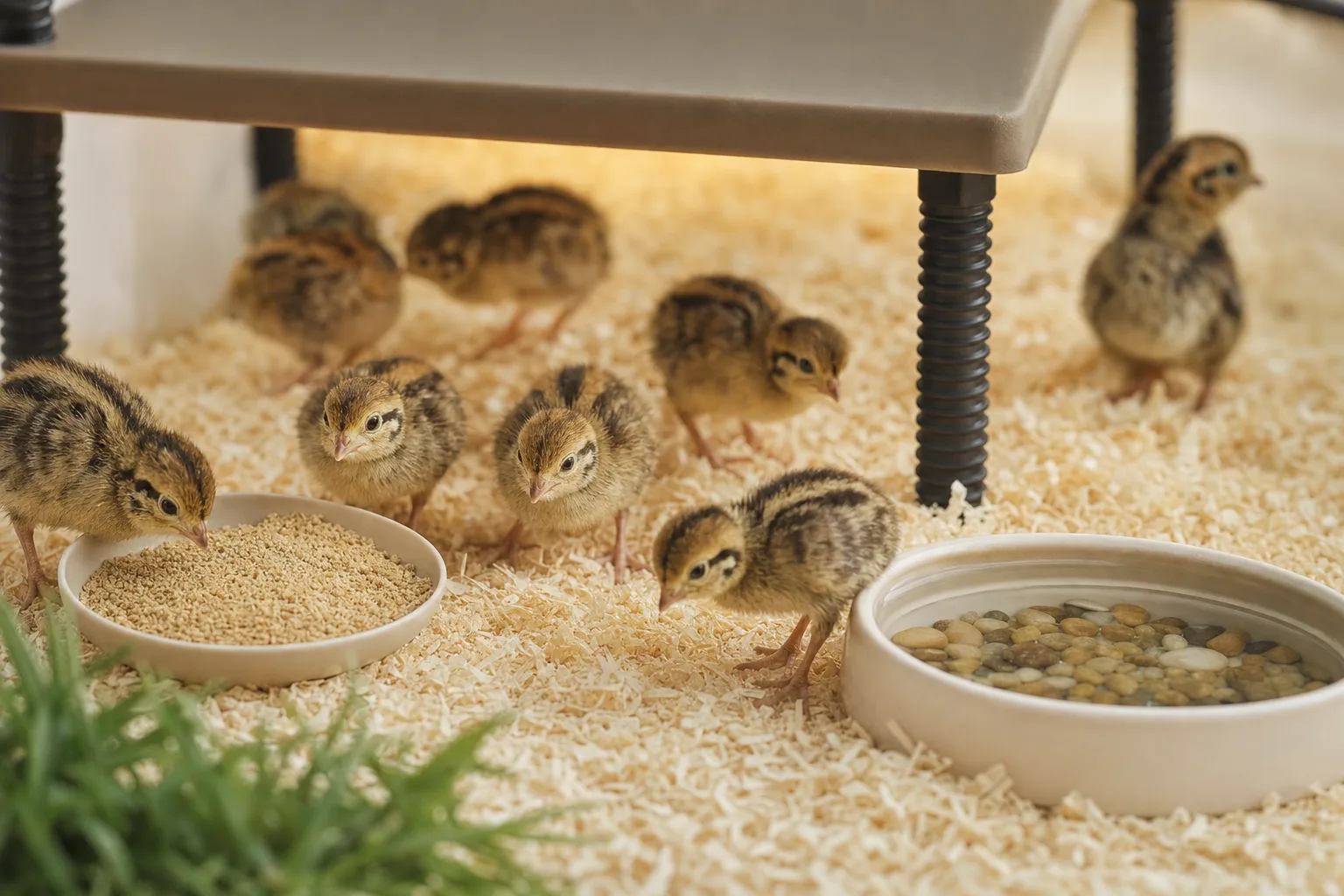
Clean and reposition both stations. Take bedding and droppings out of the dish, clear a blocked feeder opening, and refill with fresh starter. Put clean water where every chick can reach it without awkward stretching.
Check the feeder for an empty hopper or blockage. Food the chicks cannot reach looks much like food they refuse. Keep both stations visible, then watch the chicks after you fix access.
Step 4: Verify brooder warmth
Measure temperature where the chicks stand. During week 1, use 95 °F / 35 °C at chick level as the brooder check, then reduce by about 5 °F each week. Cold, crowding, or a dark corner can look like feed refusal.
This figure checks the setup, not a diagnosis. Change the dish position or warmth one at a time, then watch which correction changes their behavior.
Step 5: Recheck and escalate
Reassess the group and any outlier. After you redo the presentation and setup checks, look again at feed access, drinking, activity, and whether one chick is separating from the group. Keep notes if the problem continues.
If a chick is weak, unresponsive, repeatedly falls, will not drink, or gets worse, stop experimenting and contact a qualified poultry or avian veterinarian or your extension office. A refusal alone does not diagnose a disease.
Common mistakes
Most keepers change too much at once or overlook the easy parts of the feed station. Keep the response small and visible: improve presentation, check access and warmth, and watch the chicks before you blame the feed.
- Forcing water: Leave beak feeding out of the plan and seek professional guidance for a failing chick.
- Changing several things together: Move one setup detail at a time so you can identify the useful correction.
- Using unverified extras: Stay with a labeled complete starter while you troubleshoot, rather than a homemade ration.
- Skipping a hygiene check: Remove bedding and droppings, then confirm the dish and waterer are reachable.
Troubleshooting
Use the symptom to pick the next check, then make one correction and observe. If the whole group refuses, start with the shared station. If one chick goes quiet, give that bird closer attention and call for help sooner.
Every chick ignores the dish
Check that the dish is shallow, visibly clean, and reachable. Inspect the crumble and verify water is beside it. Measure warmth at chick level before changing the feed.
Only one chick hangs back
Watch that bird separately without forcing food or water. Look for weakness, unresponsiveness, repeated falling, poor drinking, or worsening. Contact a qualified poultry or avian veterinarian or your extension office if any appear.
The chicks peck at bedding instead
Move the clean dish into an obvious, easy-to-reach spot, remove soiled material, and keep water nearby. Check again after correcting access, and avoid extra unverified treats.
Frequently asked questions
Should I crush starter crumble for quail chicks?
Adjusting presentation can help when pieces are too large for newly hatched quail. The Poultry Site discusses oversized starter crumbles, and Forget Me Not Quail Farm describes crushing as keeper practice. Use a clean method, keep the area hygienic, and follow the feed label.
Is 28% protein enough for quail chicks?
Yes, it falls within the 28–30% game-bird starter target for Coturnix from weeks 0–6. Check the guaranteed analysis and life-stage directions on the bag before using it as the chick ration.
Can a cold brooder make quail chicks stop eating?
Cold can disrupt normal brooder behavior, so verify 95 °F / 35 °C at chick level during week 1. Then reduce the setting by about 5 °F per week. Temperature is a setup check, not proof of the cause.
Should I switch feed immediately when quail chicks refuse starter?
Check access, texture, water, and label first, and fix one variable at a time so you can see what helped. Avoid homemade mixes and unverified treats while you are still seeing a refusal.
What if only one quail chick is not eating?
Watch that chick closely and compare its activity with the group. If it stays weak, unresponsive, repeatedly falls, cannot drink, or seems worse, stop experimenting and contact a qualified poultry or avian veterinarian or your extension office.