 Quail Corner

How to Feed Adult Quail (2026): A Simple Daily Routine
Feed adult Coturnix a complete ration that matches the flock's job, keep it dry and available, and use measured daily use to catch waste. Laying hens need a layer label; non-breeding adults fit a maintenance or complete game-bird feed.
How to Feed Adult Quail
A repeatable six-step feeding routine
Step 1 Match feed to flock purpose
- Separate layers from non-breeding adults
- Read the protein and use label
Step 2 Set up daily access
- Fill a clean feeder
- Keep fresh water beside it
Step 3 Measure and adjust
- Check leftovers and fines
- Change the setup before changing the ration
Result
A dry, low-waste feeding station matched to your adult Coturnix flock.
Quick answer
Choose a complete adult feed, keep it in a clean feeder beside fresh water, and check what remains each day. Allow approximately 25–30 g of feed and 30–45 ml of water per adult quail per day as a starting check. Fix spills, dampness, and poor feeder access before making big changes.
For the broader feed choice, see best adult quail feed (2026): 5 Complete Rations. That comparison covers verified adult layer and maintenance rations, bag sizes, and important label caveats.
What you'll need
- A complete adult quail or game-bird ration
- A clean feeder that keeps birds from billing feed onto the floor
- Fresh water and a drinker you can inspect quickly
- A sealed, dry storage container for the open bag
- Insoluble grit if the flock gets anything besides crumble
- Free-choice oyster shell for layers when relevant
For a small laying flock, Wholesome Harvest Quail Layer 10 lb is the lower-upfront bag to consider. The listing gives it 26% protein and added calcium. That figure sits above the 20–24% layer range, so read the label and choose it deliberately.
For a mixed adult or non-breeding game-bird setup, Wholesome Harvest Game Bird 24% 10 lb is the more flexible fit. The listing describes a complete non-GMO turkey and game-bird feed with omega-3, kelp, vitamins, probiotics, and herbs. Check current availability before planning around it.
Our Top Picks

Step-by-step
Step 1: Identify the flock purpose
Separate laying hens from non-breeding adults in your decision. Choose a complete quail or game-bird layer ration for birds producing eggs. For adults that are not breeding or laying, look for a maintenance or complete game-bird formulation.
Write the intended use beside the bag before buying. A feed can have a familiar poultry name and still miss your goal. Mississippi State Extension's Quail Feeding Programs and Feeding Quail explain complete rations and life-stage changes. For a backyard-focused second opinion, see Incubator Warehouse's What Do Quail Eat? Complete Feeding Guide and Forget-Me-Not Quail Farm's What to Feed Coturnix Quail and Common Feeding Mistakes. Extension guidance wins if sources disagree.
Step 2: Read the label before switching
Check the protein percentage, intended life stage, form, and storage directions. Adult layer feed sits in the 20–24% range. Chick starter is a different job at 28–30% for weeks 0–6, so move growing chicks through their starter stage before using an adult ration.
Change from starter to adult feed gradually after the starter stage. Mix the old and new crumbles during the changeover, watch that the flock keeps eating, and avoid adding a pile of treats at the same time. If you are considering chicken layer feed, read Do Quails Eat Chicken Feed? Label Guide for Coturnix (2026) for label-based guidance instead of a blanket yes or no.
Step 3: Establish clean, steady access
Fill the feeder with enough clean feed for routine access, then place the drinker where birds can reach it without bedding falling in. Adult quail generally use approximately 25–30 g of feed and 30–45 ml of water each day. Heat increases water demand, so inspect the drinker more often in hot weather.
Do not use a rigid scoop limit as a substitute for observation. If birds empty the feeder, check access and refill it. If feed is scattered under it, raise or change the feeder before buying a different ration. See How often should you feed quail (2026): A simple schedule for more detail on free-access timing, refills, and waste control.
Step 4: Add the right free-choice support
Offer insoluble grit when the flock receives anything besides crumble. Layers can also have oyster shell free-choice when relevant. Keep these in separate dishes so a bird can choose what it needs, and label each dish clearly for anyone else doing chores.
Grit and oyster shell do different jobs. One is for grinding, while the other is a calcium choice for layers. Neither turns an incomplete ration into a complete adult feed.
Step 5: Measure use and leftovers
At the same time each day, look at the feed in the trough, the floor below it, and the water. Note whether the feed is clean, damp, dusty, or mostly fines. Your flock's daily use is a guide for controlling waste, not a target that forces hungry birds to wait.
Keep a small note for several days. If the birds use far less than expected, check spillage, stale feed, feeder height, and whether every bird can reach it. If the feed disappears fast, check for billing and pests before simply filling a larger pile.
Step 6: Store and refresh the setup
Keep the open bag in a sealed, dry container off the floor. Wash and dry the feeder when it gets dusty or damp, discard wet or fouled feed, and keep the waterer clean. A dry storage spot protects the ration and makes changes in appetite easier to notice.
Review the label when you buy a new bag, especially if the brand or formulation changes. Availability changes too, so check the current listing before making a product the permanent plan.
Common mistakes
- Using starter too long: Starter is for weeks 0–6 at 28–30% protein. Move mature birds to a complete adult ration matched to their purpose.
- Choosing chicken layer by habit: Chicken layer feed at 16% is too low for quail. Check the label and use the chicken-feed guide above before substituting.
- Mixing treats into the main ration: Scratch and extras make daily use harder to judge. Keep the complete feed as the dependable base.
- Letting the feeder get wet: Damp feed spoils the routine and hides how much birds are really eating. Move the feeder or replace fouled feed.
Troubleshooting
Birds leave feed or suddenly eat less
Start with the setup: check for damp feed, a blocked opening, excess fines, stale stock, or a drinker problem. Change one thing at a time and watch the flock. For symptom-first checks, read Why Are My Quail Not Eating Feed: 5 Checks. If the concern continues or birds look unwell, talk to a vet or extension office.
Feed disappears, yet the floor is covered
The feeder is probably allowing billing, or it is too low and easy to scratch through. Clean the spilled area, adjust the feeder position, and compare the next day's leftovers. Use measured daily consumption to reduce waste, while keeping feed available to the flock.
Some birds cannot reach the feed or water
Watch the station during a normal feeding period. Move it to an open spot, clear bedding from the openings, and provide enough access for the whole covey. A dry, clean station is the first fix to make before changing a complete ration.
Check the current Game Bird 24% listing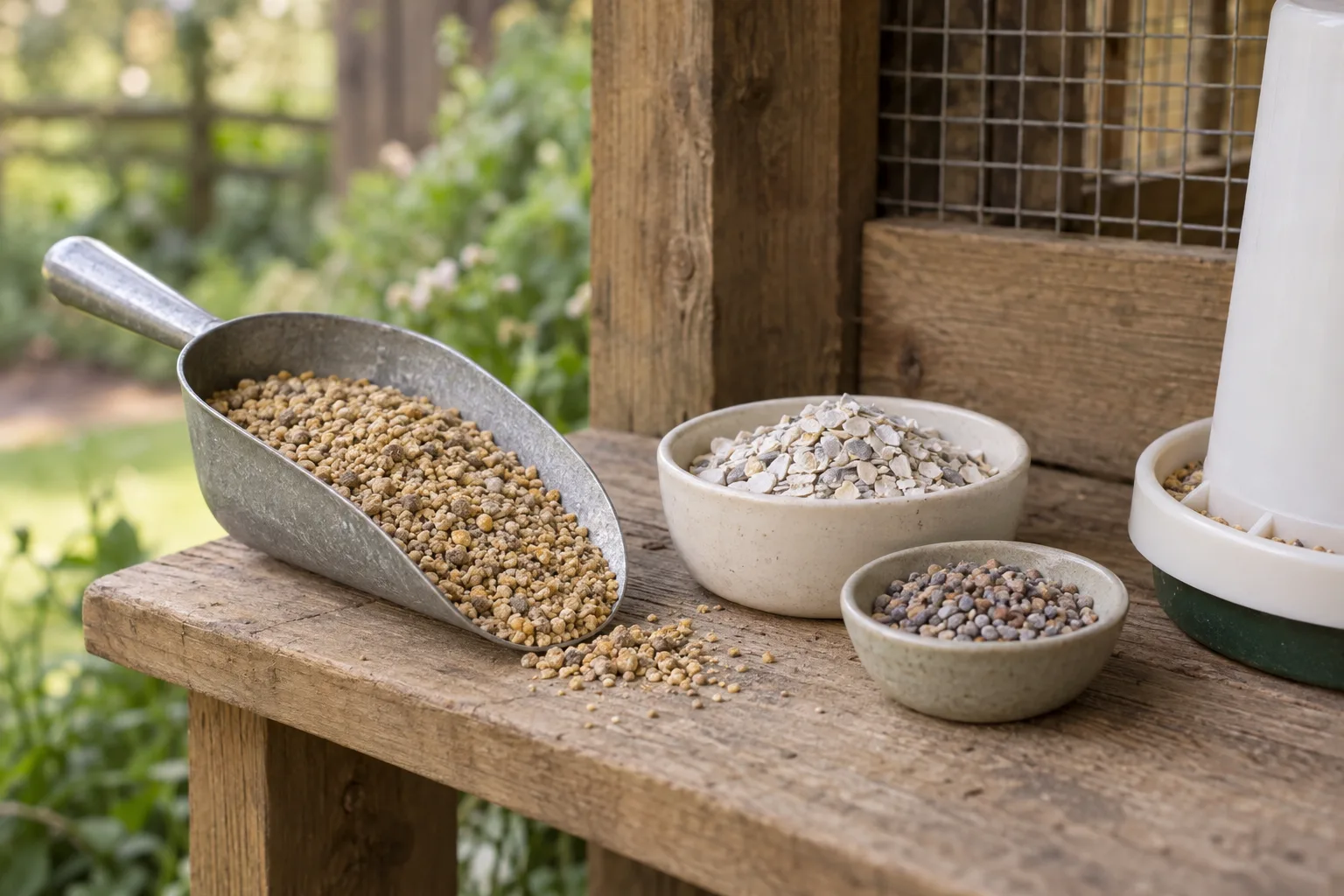
Frequently asked questions
How much adult feed do quail need each day?
Plan on approximately 25–30 g of complete feed per adult quail per day. Use that figure as a waste-control check, not a hard ration limit. If clean feed is gone early, improve feeder access and check the flock before cutting portions.
When should quail switch from starter to adult feed?
Starter is the 28–30% game-bird ration used for weeks 0–6. Move birds onto the adult feed named on your label after that stage, changing over gradually so the flock has time to accept the new crumble.
What protein percentage is best for laying quail?
A quail or game-bird layer feed in the 20–24% range is the stated target. A 26% quail-layer product is above that range, so treat it as a specific label choice rather than assuming every laying flock needs more protein.
How much water does an adult quail drink?
An adult quail uses about 30–45 ml of water per day, with more needed in hot weather. Keep water clean and available beside the feeder, and check the drinker every day for bedding, feed dust, or blockage.
Do quail need grit or oyster shell with adult feed?
Offer insoluble grit when adults eat anything besides crumble. Laying hens can have oyster shell free-choice when relevant. Grit supports grinding, while oyster shell supplies a separate calcium choice, so do not treat them as the same thing.