 Quail Corner
Best Overall
Manna Pro Chicken Grit with Probiotics for Healthy Chick Digestion, 5 lb
$
Check Price on AmazonDo quail need grit? Coturnix eating only commercial crumble may not need supplemental grit. Once you offer treats, whole grains, forage, or another food, insoluble grit is the sensible choice. Oyster shell is separate and serves layers as a free-choice calcium source.
Start with the diet, then buy the material that matches it. See our verified grit picks when your covey receives foods other than crumble, and use extension guidance to keep complete feed as the foundation.
| Type | Material | Best fit | What it does |
|---|---|---|---|
| Insoluble grit | Granite or another hard, insoluble material | Quail eating foods besides crumble | Provides hard material for grinding |
| Chick-labeled grit | Insoluble grit with a young-bird label | Chicks receiving foods besides crumble | Matches the label’s young-poultry use |
| Oyster shell | Crushed shell | Laying quail, offered free-choice | Supplies a separate calcium source |
The practical split is simple: hard insoluble grit belongs with a varied diet, while oyster shell belongs in a layer setup as a separate free-choice supplement. A crumble-only covey may need neither extra product. Read the label before buying, since “poultry” covers birds with different ages and diets.
Granite grit is the straightforward pick for Coturnix that receive treats, whole grains, or forage. Look for “insoluble” and “granite,” or another hard material, on the listing. It is a supplement for the added foods, not a replacement for complete game-bird feed.
Young birds need closer label matching than a mixed-age flock. Coturnix starter feed is 28–30% game-bird starter for weeks 0–6, and chicks eating only that crumble may not need extra grit. If you introduce another food, choose a chick-labeled option and follow its directions. Murray’s Hatchery’s chick-grit guidance specifically states that its chick grit is suitable for quail chicks. Myshire Farm’s advice is a vendor source that recommends considering chick grit when treats begin.
Oyster shell is for a different decision. Offer it free-choice to layers alongside a suitable complete layer feed. It is too soft to replace insoluble grit’s grinding role, a distinction also explained in Oregon State University Extension Service’s guide to feeding laying hens. Mississippi State University Extension Service likewise stresses complete feeding rather than treating shell material as the whole nutrition plan.
Check the diet first, then confirm the material, life-stage wording, and package size. Those details matter more than a colorful bag or a broad “poultry” claim. A product that matches the job is easier to use correctly and less likely to blur grit with oyster shell.
Look for clear wording that the product is insoluble grit and identify the material if the label provides it. Granite is a useful plain-language signal. Skip listings that only promise digestion support without explaining what the product is. Marketing language, including the word “probiotics,” does not prove a health outcome.
For Coturnix chicks, use the life-stage wording on the package and follow its label. A chick-labeled product can be a sensible match when chicks receive foods beyond starter crumble. Button quail are king quail, also called Synoicus chinensis, and differ from Coturnix. This guide does not set a button-quail grit size or schedule, so avoid guessing.
Grit cannot repair an unsuitable ration. Coturnix layer feed is 20–24%; chicken layer feed at 16% is too low for quail. For a closer look at complete feed by life stage, see our quail feed picks. Mississippi State’s Quail Feeding Programs is a useful extension reference.
A small bag keeps the purchase simple for one cage. A larger pack makes sense for several cages or a keeper who regularly offers varied foods. Compare the price band, package weight, and storage space. Prices, ratings, review counts, and availability change, so treat the listing as a moving snapshot.
Separate the two at the shelf. Grit is the hard material for grinding foods besides crumble. Oyster shell is the free-choice calcium source for layers. Mississippi State’s Feeds and Nutrition page and Oregon State’s guidance both support keeping sound feeding practice ahead of supplement claims.
Grit also does not become the base ration just because it is available. For a simple routine that keeps feed decisions separate from supplements, use our quail feeding schedule.
The lowest price band is enough when the label matches the job and you have a small flock. Paying more mainly buys a larger supply, a clearer fit, or a listing with more established review history. Do not pay extra for a health promise that does not change the material or use.
| Budget tier | What you get | Who should choose it |
|---|---|---|
| $ band | A basic insoluble or chick-labeled bag | One small flock with a clear diet need |
| $$ band | More package capacity or a more established listing | Several cages or regular varied feeding |
| Shell plus grit | Two separate materials for two separate jobs | Layer keepers who also offer foods beyond crumble |
For most Coturnix keepers who need granite grit, start with the catalog-listed Manna Pro 5 lb option. Its listing identifies crushed granite and a 5-pound package. Prices and availability can change, and the listing’s “probiotics” wording is marketing language rather than proof of a medical or digestive result.
Most mistakes come from buying by the bird label alone. Make the diet the first question, then check the material and age wording.
Buy only after the diet says you need grit. For a Coturnix flock receiving treats, whole grains, or forage, the catalog-listed Manna Pro crushed-granite option is the contextual pick here. It is a 5-pound bag with a $ price band, and the listing names poultry as a target group. Ratings, prices, and availability can change.
$
Check Price on AmazonIf you have decided grit fits your setup, check the current Manna Pro listing. This is a label-based recommendation, not a claim that the product was tested or that its marketing language guarantees a result.
For a broader category roundup, read best grit for quail (2026): 8 verified picks. For feed labels, see our chicken-feed label guide, and browse more quail feed and water guides.
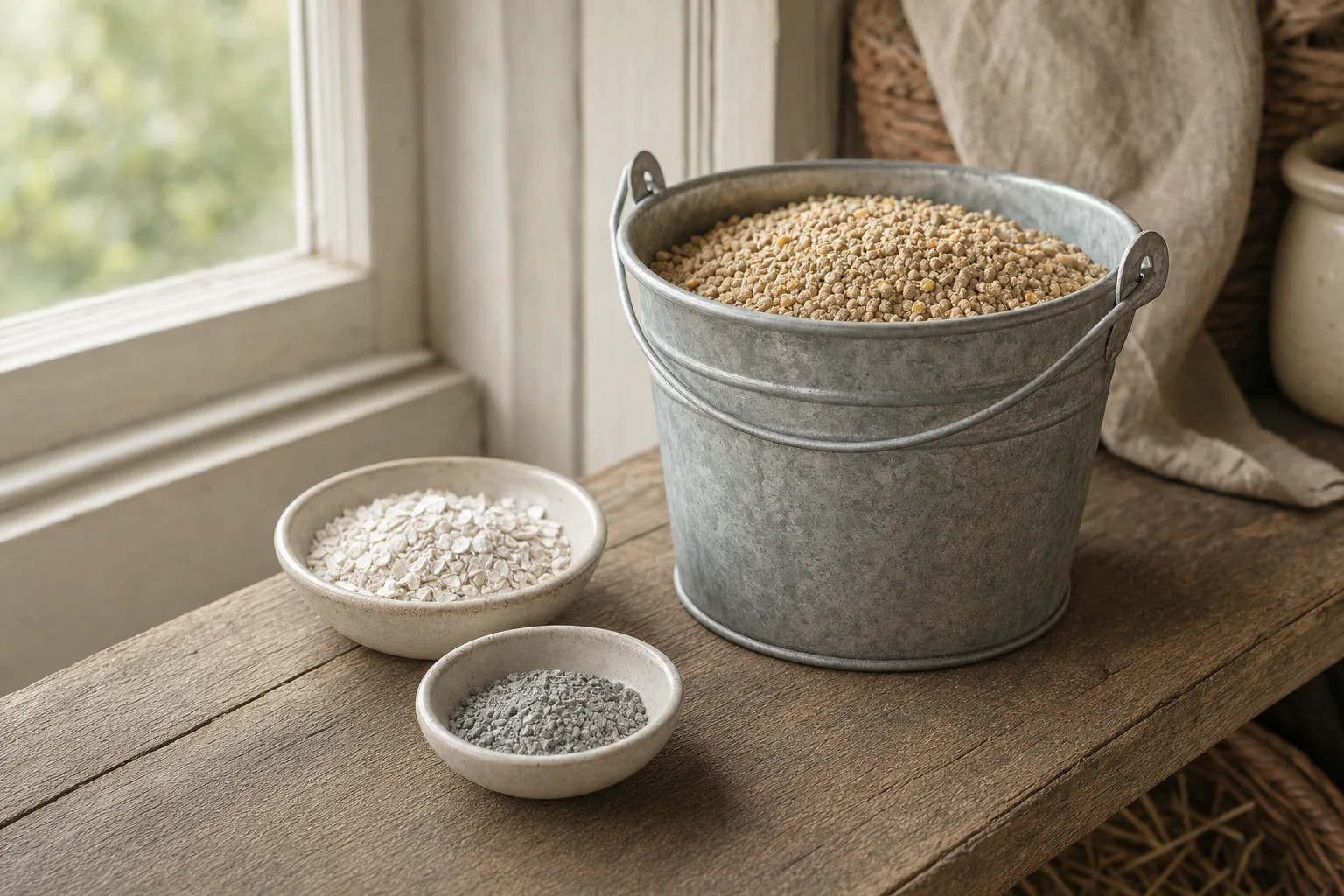
Quail eating only commercial crumble may not need supplemental grit. If you add treats, whole grains, forage, or another food, provide insoluble grit suited to the bird’s life stage and follow the product label.
The answer depends on the diet, rather than the Coturnix name alone. Crumble-only birds may not need extra grit; birds eating other foods need insoluble grit. Oyster shell is a separate, free-choice calcium source for layers.
Button quail differ from Coturnix, and this guide does not assign them a grit size or schedule. If their diet includes foods beyond crumble, check the product label and ask a qualified avian or poultry professional about an unusual feeding plan.
No. Oyster shell is a separate calcium source offered free-choice to laying quail. Insoluble grit handles the hard-material grinding role. Oyster shell is too soft for that job, so one should not be used as a substitute for the other.
Some poultry grit can fit quail use, but check the material and label first. Look for insoluble grit and wording that suits the bird’s life stage and intended use. Do not approve a product simply because it says poultry.
Use a sound complete layer feed as the base, offer oyster shell free-choice for layers, and add insoluble grit when the diet includes anything besides crumble. The shell and grit have separate jobs, so keep that distinction clear when shopping.