 Quail Corner
Best Overall
Harris Farms Nurture Right Egg Incubator with Auto Turner, Holds 22 Eggs
$$
Check Price on AmazonThe best quail egg incubator for most backyard keepers is the Harris Farms Nurture Right 360. At about $158, it pairs an automatic turner that stops three days before hatch with a built-in humidity display. It is the incubator named most often in quail-keeping circles.
It holds 22 chicken eggs or, by keeper reports, about 40 to 60 quail eggs once you drop in a quail tray. Below are five incubators that actually handle quail-size eggs, from a $39 budget pick to a $530 set-and-forget machine.
Ranked by quail-fit trays, heat stability, humidity control, and cost per egg
Auto turner, humidity display, most-owned in quail circles
$$
Best overall for small hatches
Check Price on AmazonPair with GQF racks for 120 quail eggs
$$
Best for volume hatches
Check Price on AmazonAutomatic humidity, lid never opens
$$$
Premium, zero fiddle
Check Price on AmazonQuick answer: For a few dozen eggs at a time, the $158 Nurture Right 360 wins. For volume, the $206 HovaBator 2370 plus a GQF turner holds 120 quail eggs. For zero-fiddling humidity, the $530 Brinsea Ovation 56 EX. For a first hatch, the $50 CluckRun 12/30 has a real quail tray. For under $40, the VEVOR 24.
$$
Check Price on Amazon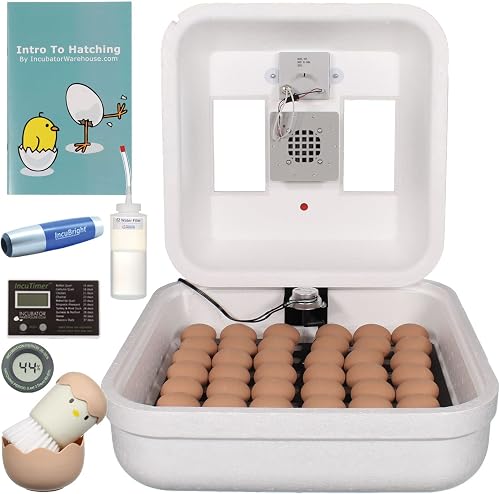
$$
Check Price on Amazon
$$$
Check Price on Amazon| Product | Best for | Price band | Key spec | Verdict |
|---|---|---|---|---|
| Nurture Right 360 | Small backyard hatches | $$ | Auto turner, humidity display, 22 chicken eggs | Best all-rounder |
| HovaBator 2370 | Volume hatchers (100+ eggs) | $$ | 41-egg turner; 120 quail with GQF racks | Best for volume |
| Brinsea Ovation 56 EX | Serious hatchers | $$$ | Auto humidity, alarms, 3-year warranty | Premium, zero fiddle |
| CluckRun 12/30 | First hatch | $$ | 30-slot quail tray + built-in candler | Best first hatch |
| VEVOR 24 | Budget shoppers | $ | Auto turn, sensor, candler, $39 | Budget auto-everything |
Two things eliminated most of the field before anything else. First, the tray. Quail eggs are a fraction of the size of chicken eggs, so a standard chicken tray swallows them and they roll out of the cups. A machine only made the list if it held quail eggs securely, with a dedicated tray or rails you can add. Second, heat. Forced-air machines with a fan hold 99.5°F evenly, where still-air boxes swing between hot spots and cool corners. It is the difference between a fan oven and a bare bulb in a box: one browns evenly, the other does not.
After that we weighed humidity control, turning, and capacity against price. You want about 45% humidity for days 1 to 14, rising to 65 to 70% at lockdown on day 14 or 15. Eggs need turning three to five times a day until then. An automatic turner does that while you sleep; hand-turning only works if you are home all day. Finally, a $39 unit at 24 eggs costs roughly $1.60 a slot, while a $530 machine only earns its keep if you hatch hundreds a year. We matched each pick to the keeper who will actually use it.
$$
Check Price on AmazonThe reason this one tops the list is the turner. It rolls the eggs on its own and stops three days before hatch, which is exactly when you want the chicks to settle into position. The humidity display with a dial means you can see and adjust moisture without opening the lid and guessing.
The honest downside is that it was built for chicken eggs. The cups are chicken-sized, so quail eggs roll around in them. The keeper workaround is a drop-in quail tray, like the Incubator Warehouse 48-egg tray that sells for about $30. With that tray, keepers report roughly 40 to 60 quail eggs a hatch. Without it, expect wobble.
$$
Check Price on AmazonThe 2370 is a volume play once you pair it up. The combo comes with a thermostat, an auto turner, and a fan, but its 41-egg turner is chicken-sized. Add the GQF Automatic Turner for about $72. It holds 120 quail eggs on its extra racks and fits every HovaBator. Add a spare set of Little Giant quail rails for about $25, and you have a real volume rig.
The gap is humidity: there is no built-in display. You add a cheap hygrometer and check it yourself. For a keeper hatching 100 or more quail eggs a season, that trade is fine, because the GQF racks are the cheapest way to run a big hatch without buying a cabinet.
$$$
Check Price on AmazonThis is the machine for people who hatch hundreds of eggs a year and want to stop thinking about humidity. The Ovation pumps water from an external reservoir, so the lid never opens and the humidity stays where you set it through the whole 17 or 18 days. Programmable turning, temperature and power-fail alarms, and a three-year warranty back it up.
The price jump is real: roughly $530, more than thirteen times the $39 VEVOR. It earns its keep only if you run hatches all season, because what you are paying for is consistency, not extra capacity. For a serious breeder, the zero-fiddle humidity is worth it. For a first-timer, skip it and start with the CluckRun.

$$
Check Price on AmazonThe CluckRun is the only unit in this set with a dedicated 30-slot quail tray, and that single fact makes it the right first incubator. No workaround, no separate $30 tray, no eggs rolling in chicken cups. The turner runs at 60, 120, or 180-minute intervals and stops four days before hatch. A built-in LED candler and a countdown display round out the package at about $50.
The honest caveat is that this is a new 2026 listing. Early reviews are strong at 4.6 stars, but there is little long-term track record on the turner motor or the heating element. Treat it as a smart, cheap first hatch, and plan to upgrade if you get serious.
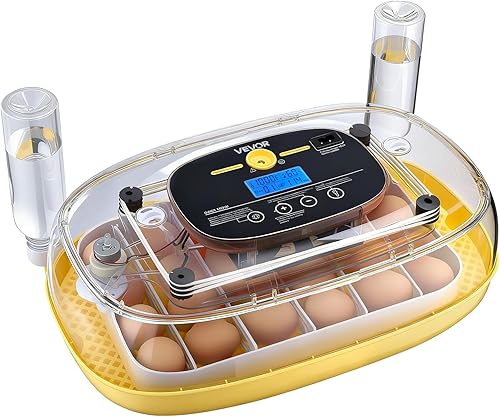
$
Check Price on AmazonAt $39, the VEVOR 24 packs in auto turning, a built-in LED candler, an integrated temperature and humidity sensor, and auto water refill. The listing says 0.9°F of fluctuation is normal, which is honest about what a $40 thermostat does. It also takes a 12V battery input, handy for a power cut.
The catch is the review base: 98 ratings. That is thin, and thin means the 4.2-star score could move either way as more owners weigh in. It sits at the top of Amazon's poultry incubator category today, so the demand is there. For a first low-stakes hatch under $40, it is hard to argue with.
Quail pack two to three times as many eggs into a tray as chickens do, because the eggs are so much smaller. That only holds when the tray grips them. A chicken tray with no rails holds fewer quail eggs, because they roll straight out of the cups.
Verified numbers: the CluckRun holds 30 quail eggs on its dedicated tray, and the GQF turner racks hold 120. Keeper-reported: the Nurture Right fits about 40 to 60 quail eggs once you add a quail tray. A week in, a quick candling quail eggs session shows which eggs are growing and which to pull.
Size your incubator for two to three hatches a month. Quail hatch in 17 to 18 days, so a machine you can refill every few weeks beats one giant box that sits half empty. Before the first pip, get the brooder ready with what chicks need once they hatch.
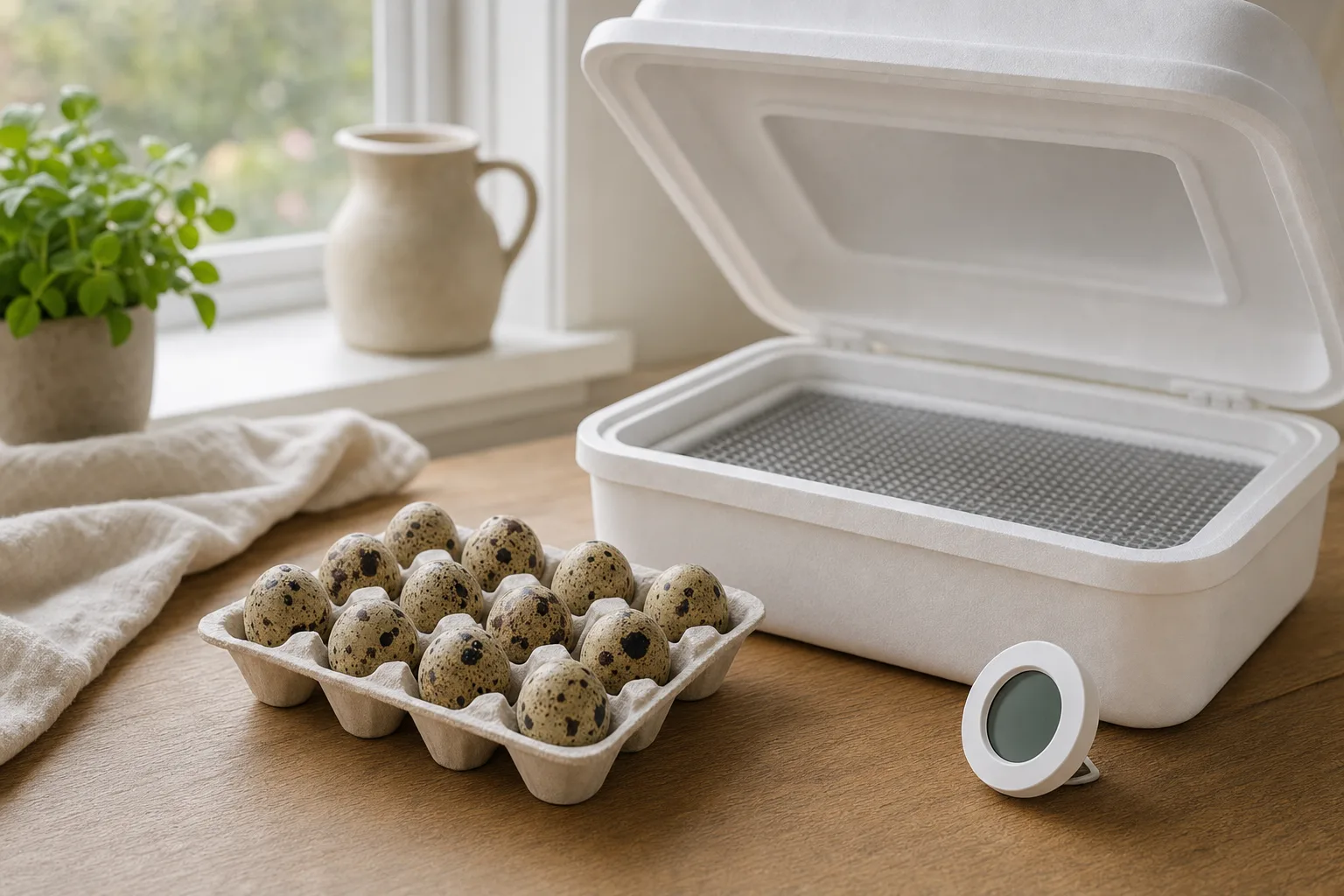
Yes. Chicken-egg slots swallow quail eggs whole because quail eggs are a fraction of the size. Use quail rails or a dedicated tray: the GQF turner racks and the CluckRun 30-slot tray hold them properly. Otherwise hatch success drops even when temperature is right.
Not strictly, but quail eggs should be turned 3 to 5 times a day for the full 17 to 18 days and stopped at lockdown on day 14 or 15. An auto turner is what most keepers run. Hand-turning only works if you are home all day.
Forced-air 99.5°F (37.5°C) for the full 17 to 18 days. Still-air, measured at the egg top, runs 101 to 102°F. Humidity is about 45% for days 1 to 14, rising to 65 to 70% from lockdown on day 14 or 15 through hatch.
17 to 18 days, and jumbo lines sometimes run 18 to 19. Most pip within 24 hours of day 17. Leave late hatchlings alone until day 19 or 20 before deciding anything.
Same 99.5°F forced-air temperature, but only 16 days, give or take 15 to 17. If you are hatching both, start button eggs a day later so lockdown lines up.